
Marrakech is an exciting city to explore, but like many popular tourist destinations, there are a few situations visitors should recognize before arriving.
Most problems are easier to avoid when you understand how they usually start.
The goal of this guide is not to make you suspicious of everyone you meet. Marrakech is full of ordinary interactions, friendly people and normal bargaining.
Instead, these are common situations where tourists may feel pressured, confused or pushed into paying for something they did not really want.
Here are 12 Marrakech scams and tourist traps worth knowing before your trip.
1. The “This Road Is Closed” Trick

This is one of the situations visitors may encounter while walking through the Medina.
Someone may tell you that the street ahead is closed, that tourists cannot go through, or that your destination is in another direction.
They then offer to show you the “correct” route.
The problem is that the street may not actually be closed, and the person may expect money afterward or lead you toward a shop.
Red Flags
Be cautious if someone:
- approaches you before you ask for help
- insists that your route is impossible
- immediately offers to guide you
- keeps walking with you after you decline
What to Do
Do not automatically change direction.
Check your map, continue toward a recognizable landmark or ask inside a hotel, café, restaurant or established business.
A simple, polite “no thank you” is usually enough.
2. Unofficial Guides in the Medina

Someone may introduce themselves as a guide or simply begin walking beside you and explaining the Medina.
At first, it can feel like friendly help.
Later, they may expect payment or try to take you into particular shops.
Red Flags
Be cautious when someone:
- starts guiding you without being asked
- refuses to clearly explain the price
- says the tour is free but later expects payment
- pressures you to visit specific shops
What to Do
If you want a guided tour, arrange one intentionally rather than accepting a random offer in the street.
Agree on the price and what is included before starting.
3. Taxi Overcharging

Taxi confusion is one of the most common frustrations tourists experience in Marrakech.
A visitor unfamiliar with local fares may be quoted a price that feels much higher than expected.
Airport arrivals, tourist attractions and busy areas can be the moments when travelers feel least confident.
Red Flags
Watch for:
- no clear fare before the journey
- a price changing after you arrive
- unnecessary confusion about payment
- pressure to accept a ride immediately
What to Do
Clarify how the fare will be calculated before you leave.
If something feels unclear, ask your riad or hotel what a normal local trip should roughly involve before heading out.
Do not get into a heated argument over a small amount, but do not be afraid to decline a ride before it starts.
4. Henna You Did Not Ask For


Around busy tourist areas, someone may quickly begin applying henna before you have clearly agreed to it.
Afterward, they may request payment.
The pressure works because the henna is already on your hand.
Red Flags
Be careful if someone:
- grabs or reaches for your hand
- starts drawing before discussing a price
- says it is a “gift”
- becomes demanding afterward
What to Do
If you do not want henna, keep your hands close and clearly decline before anything begins.
If you do want it, agree on the design and price first.
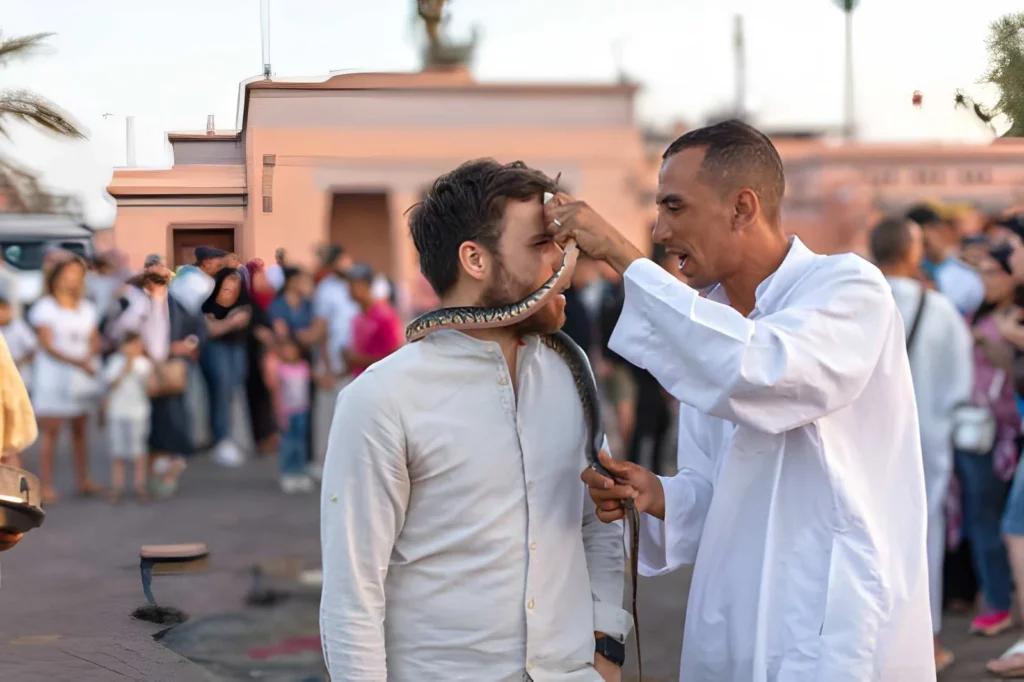
5. Photos That Suddenly Require Payment


In highly touristy areas, taking a photo involving a performer, animal or staged attraction may lead to a request for money afterward.
The problem is usually not that payment is requested.
The problem is when the amount was never discussed before the photo.
Red Flags
Be cautious if:
- someone encourages you to take a picture immediately
- no price is mentioned beforehand
- you are physically positioned for a photo without clearly agreeing
- the payment request appears only after several photos
What to Do
Ask before taking a photo if payment is expected.
If you are not interested, keep walking rather than entering the interaction.
6. The “Free Gift” That Is Not Free
Someone may offer you a bracelet, small item or souvenir and describe it as a gift.
Once you accept it, they may ask for money.
This works because returning something after accepting it can feel awkward.
Red Flags
Be cautious when strangers insist that you take something for free.
What to Do
If you do not want to buy anything, do not accept the item.
Politely decline and continue walking.
7. Souk Price Pressure
Bargaining itself is not a scam.
Negotiation is common in many traditional market situations.
The problem begins when a visitor feels pressured, confused or unable to leave after showing interest in an item.
What Normal Bargaining Looks Like
You ask the price.
The seller gives a number.
You make an offer.
You either agree or walk away.
When It Becomes Uncomfortable
Be cautious if:
- the price changes dramatically after you agree
- another item is substituted
- you are pressured not to leave
- additional charges suddenly appear
What to Do
Compare prices before buying.
Do not negotiate unless you are genuinely interested.
And remember that you can always walk away if you are uncomfortable.
8. Restaurant or Menu Price Surprises


Most restaurants are straightforward, but misunderstandings can happen when prices are not clearly displayed.
A tourist may order without checking the menu and later be surprised by the bill.
Red Flags
Be cautious if:
- no menu with prices is available
- someone aggressively pushes you to sit down
- prices are unclear
- extras appear without explanation
What to Do
Check the menu before ordering.
If something is unclear, ask.
It is easier to solve confusion before ordering than after the meal.
9. Fake or Unclear Tours
Tourists may be offered excursions to Agafay, Ourika, the Atlas Mountains or other destinations without fully understanding what is included.
A very cheap price can sometimes become more expensive once extras are added.
Red Flags
Before booking, be cautious if you cannot get clear answers about:
- transport
- meals
- entrance fees
- guide fees
- pickup location
- return time
What to Do
Ask exactly what is included before paying.
Keep a screenshot or confirmation of the booking details.
If you book online, compare the itinerary rather than looking only at the cheapest price.
If you prefer to book a Marrakech excursion through a platform with clear inclusions and reviews, you can compare options below. I may earn a small commission if you book through this link, at no extra cost to you.
10. ATM “Help” From Strangers
Using an ATM is one situation where you do not need assistance from a random person nearby.
Someone offering to help with the machine may be distracting you or trying to see your PIN or cash.
Red Flags
Be cautious if someone:
- stands unusually close
- offers help without being asked
- tries to touch the machine
- distracts you while cash is being dispensed
What to Do
Use ATMs in well-lit, established locations when possible.
Cover the keypad when entering your PIN.
If anything feels wrong, cancel the transaction and leave.
11. Wrong Change or Cash Confusion
Tourists unfamiliar with Moroccan notes may take longer to recognize denominations.
That can make cash transactions confusing, especially in busy situations.
What to Do
Take a few seconds to check your change before walking away.
Carry smaller notes when possible.
Do not let someone rush you while counting money.
This is particularly useful in markets, taxis and small shops.
12. Being Redirected to the “Better” Riad, Shop or Attraction
A visitor looking for a specific destination may be told that it is closed, full, moved or no longer operating.
The person then recommends somewhere else.
Sometimes the alternative may simply be a business where they receive a commission.
Red Flags
Be cautious if someone tells you:
- your riad is closed
- the attraction is closed
- the shop moved
- your booking is invalid
especially when they immediately suggest another place.
What to Do
Contact the business directly before changing your plans.
Use the phone number from your confirmed booking rather than relying on someone in the street.
Bargaining Is Not Automatically a Scam
This distinction is important.
Negotiating a price in a Marrakech souk does not automatically mean someone is trying to scam you.
Bargaining can be part of the shopping experience.
The difference is pressure and transparency.
If you understand the price, are free to say no and both sides agree voluntarily, that is simply negotiation.
A situation becomes more concerning when someone hides costs, changes the agreement or tries to prevent you from leaving.
How to Avoid Most Marrakech Scams
You do not need complicated strategies.
A few habits make a big difference.
Know where you are going before leaving your accommodation.
Ask for prices before accepting services.
Avoid following strangers who approach you with unsolicited directions.
Keep smaller cash available.
Check restaurant menus before ordering.
Book important tours through sources you trust.
And most importantly, do not be afraid to say no.
You do not owe anyone an explanation.
What to Do If Someone Keeps Pressuring You
Do not turn the interaction into a long conversation.
A short and clear response works better.
Say no, keep walking and move toward a busier area or established business if necessary.
If you feel genuinely unsafe, prioritize getting away from the situation rather than continuing an argument.
For serious incidents, theft or threats, contact local authorities and your accommodation for assistance.
Should You Be Worried About Visiting Marrakech?


Knowing about scams should help you feel more prepared, not more afraid.
You do not need to walk around Marrakech assuming every interaction is dishonest.
The better approach is simply to recognize situations where money or services are unclear.
Most problems become much easier to avoid when you ask one simple question before agreeing to anything:
“How much?”
Marrakech Scams vs Marrakech Travel Mistakes
They are not the same thing.
A scam involves someone intentionally misleading or pressuring you for money.
A travel mistake is something you can create yourself through poor planning, such as booking too many activities or arriving without knowing where your riad is located.
For those situations, read my Marrakech Travel Mistakes guide.
First Time in Marrakech?
If this is your first trip and you want more than scam advice, read my First Time in Marrakech guide for practical information about accommodation, money, transport, the Medina and what to expect.
Frequently Asked Questions
What are the most common scams in Marrakech?
Common situations include unofficial guides, misleading directions, unclear taxi pricing, unwanted henna, payment pressure around photos and unclear prices for tours or services.
Is bargaining in Marrakech a scam?
No.
Bargaining itself is normal in many souk shops.
The important thing is that you understand the price and remain free to walk away.
Should I accept help if I get lost in the Medina?
You can ask for help, but it is often easier to ask someone working inside an established café, hotel, restaurant or shop rather than following someone who approaches you unexpectedly.
Are Marrakech taxis a scam?
No.
Taxis themselves are a normal way to get around Marrakech.
The issue for visitors is usually unclear pricing or misunderstandings about fares.
Is Marrakech safe despite these scams?
Scams and petty crime are concerns in tourist areas, but knowing the common situations and using normal travel awareness can reduce your risk.
What should I do if I think I have been scammed?
If it is a small disagreement, focus on leaving the situation safely.
For theft, threats or a serious incident, contact local authorities and your accommodation, and keep documentation if you may need to contact your insurer.
Final Thoughts
The best way to avoid Marrakech scams is not to become suspicious of everyone.
It is to slow down before agreeing to something.
Know the price.
Know where you are going.
Do not accept services you did not ask for.
Do not follow someone simply because they sound confident.
And remember that saying no is completely fine.
Marrakech is much easier to enjoy when you recognize the difference between a normal local interaction and a situation where someone is trying to pressure or confuse you.
If this is your first visit, my First Time in Marrakech guide covers the practical basics beyond scams.


